Some companies earn their reputation over decades. They have the right people, the right product, and the kind of credibility that takes years to build. And then you look at their website and something does not add up.
That is where this story starts.
2020: A Broken Website and a Burned Client
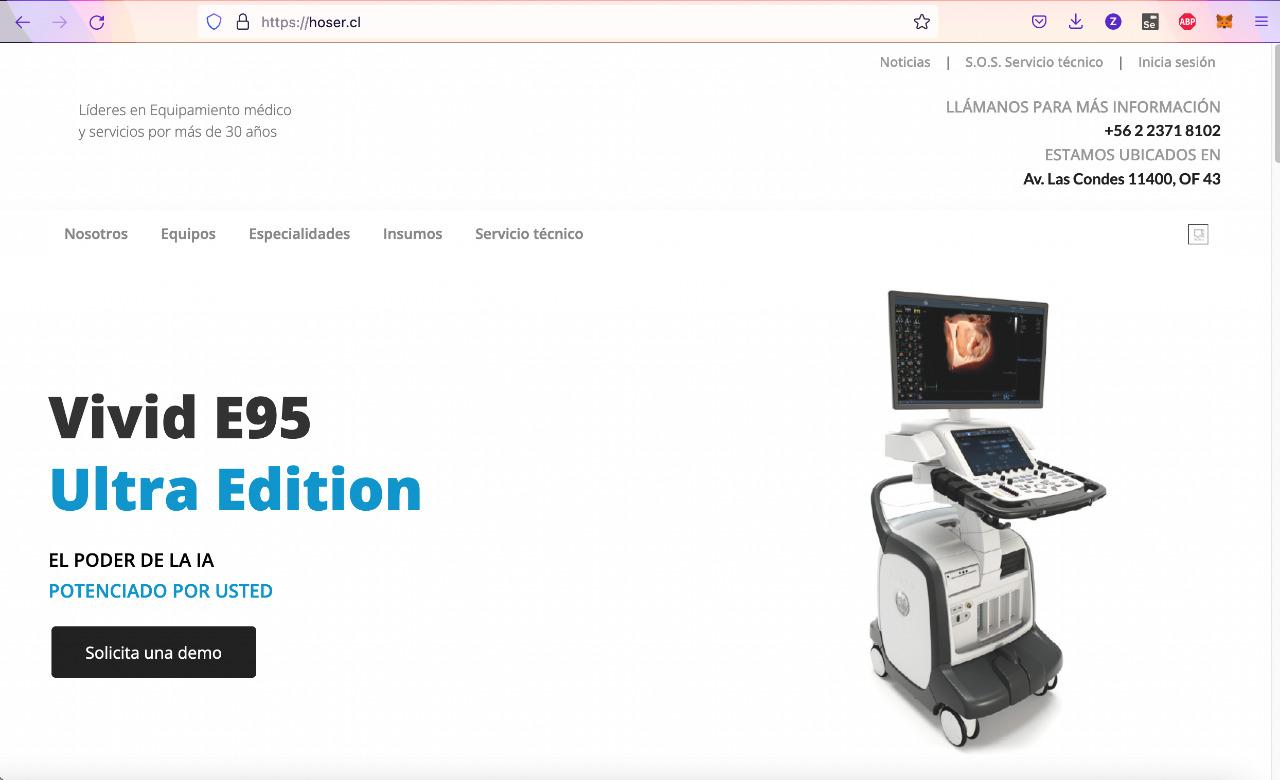
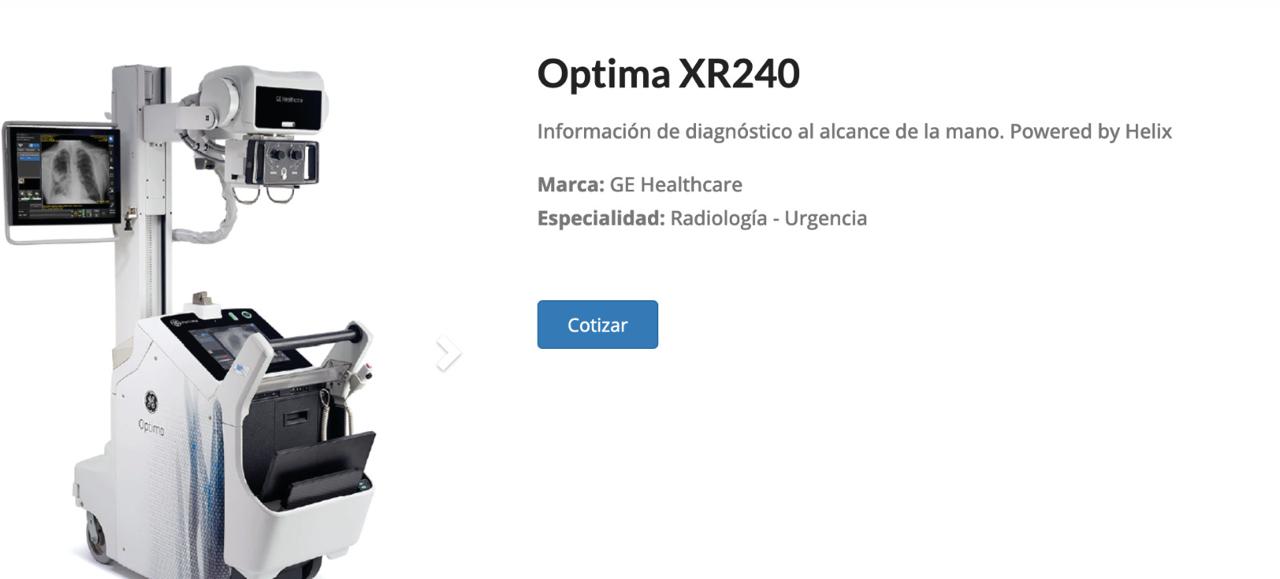
In 2020, I got on a call with Hoser, a company based in Chile. They represent General Electric and other major brands in medical equipment and supplies for the healthcare industry. Founded in 1985, at their peak they held around 60% of market share in their segment. A serious company, with real standing in their field.
Their website barely worked. A WordPress installation that had been left to decay, disorganized, missing functionality, and not doing anything useful for the business.
They had also just left a marketing agency. Not because the relationship ended badly, exactly. More because after a while the meetings kept getting fancier and the deliverables kept getting thinner. Polished presentations. Screenshots of analytics dashboards that nobody could verify in real time. The kind of work that looks productive until you ask what it actually produced.
So they were skeptical. Reasonably so.
I gave them my honest read of the situation in that first call. No pitch. Just: here is what I see, here is what I think needs to happen, and here is the order I would do it in.
The Plan: Order Before Ambition
The first thing I told them was that they did not need to spend a lot of money. What they needed was order.
Their digital infrastructure was unstable. You cannot build on top of instability and expect it to hold. So the plan was simple in sequence, if not in execution: stabilize the website first. Once that was solid, get the technical configurations right on Google Ads and Google Analytics, not with promises of dramatic results, just with proper setup. From there, start building authority in Google Search Console. And begin showing up consistently on Instagram and LinkedIn, not aggressively, just coherently.
Clear goals. Achievable milestones. No magic.
I also told them what I tell every client at this stage: do not expect to see results overnight. This kind of work takes at least six months to show up in the numbers. They had to be willing to trust the process.
They were.
Phase 1: Build the Foundation
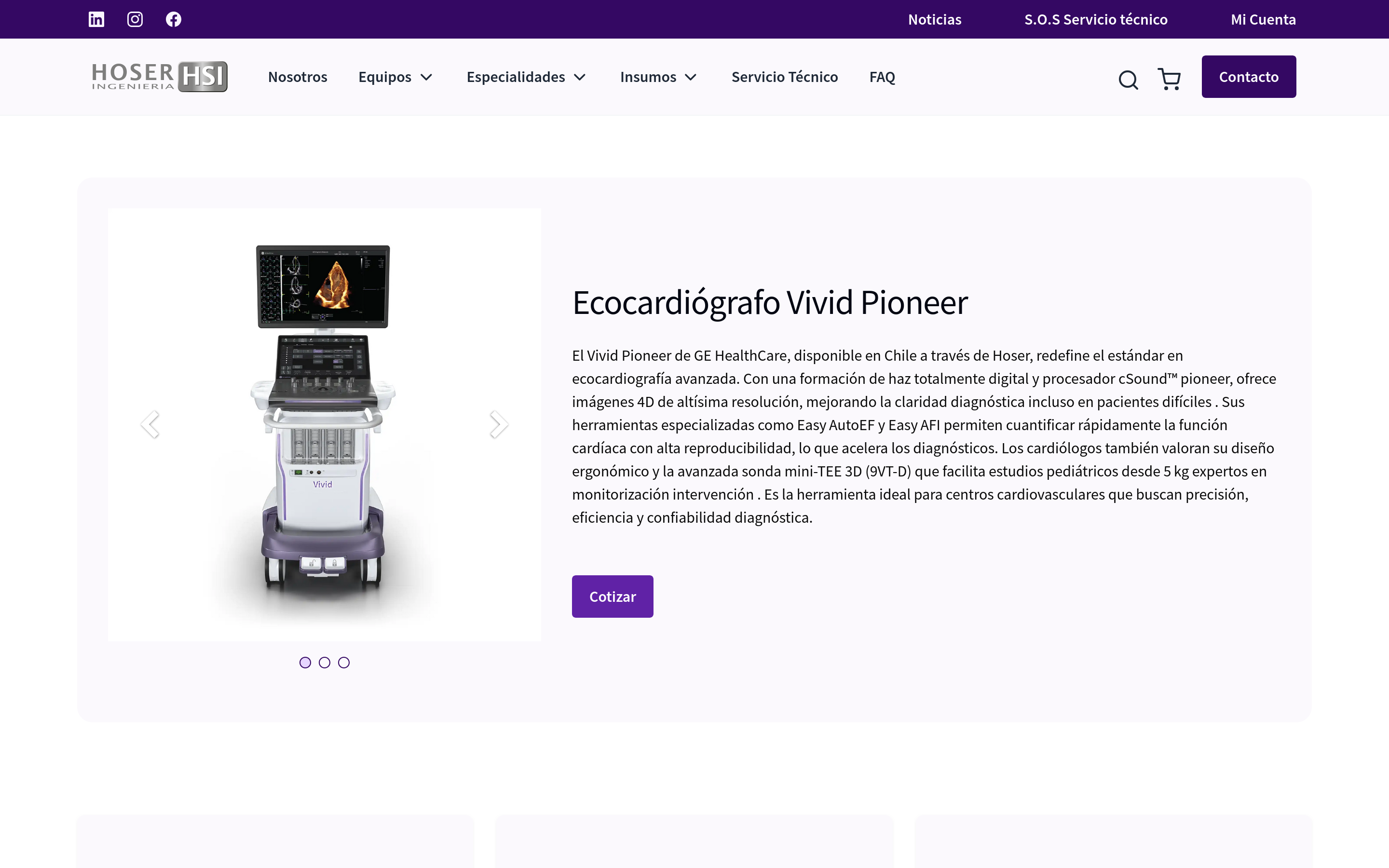
Over three to four months, we built them a custom website capable of displaying their full equipment catalog, selling supplies online, receiving inquiries for equipment, and handling customer support and technical service requests. Behind that, a fully custom administrative panel to manage products, equipment, sales, inquiries, quotations, articles, users, reports, PDF catalog assets, and more.
At the same time, we set up Google Analytics correctly, configured conversion events in Google Ads properly, and connected everything to Google Search Console so we could actually see what was working and what was not.
Then we waited.
Not passively. We monitored, adjusted, and kept the client informed at every step. But we did not chase shortcuts. The work was the work, and the work needed time.
Six months in, things started moving. Twelve months in, the direction was clear. By the end of the first two years, we had over 1,500 monthly impressions and 65 monthly clicks in Search Console, a consistent stream of trackable leads coming through the website, and a measurable record of online supply sales that had not existed before.
Those numbers are modest on paper. Context matters.
The Meeting That Changed Everything
About two years in, I asked for a meeting with the owner, the director, and the manager.
I brought two years of data. Not screenshots. Live dashboards, traceable sources, verifiable numbers. We reviewed everything together: where the traffic came from, which pages generated inquiries, which leads converted into sales, and what the website had actually produced for the business.
The number that landed hardest was the sales volume. Over those two years, the leads and sales generated through the website and social media had made the original cost of the entire project almost insignificant. I cannot share the actual figure. But the ratio of investment to return was somewhere around one to five hundred.
In an industry where a single piece of medical equipment can cost as much as a luxury car, you can do the math yourself.
That meeting went very well.
Phase 2: The Plan I Had Since 2020
After the numbers were on the table, I presented Phase 2.
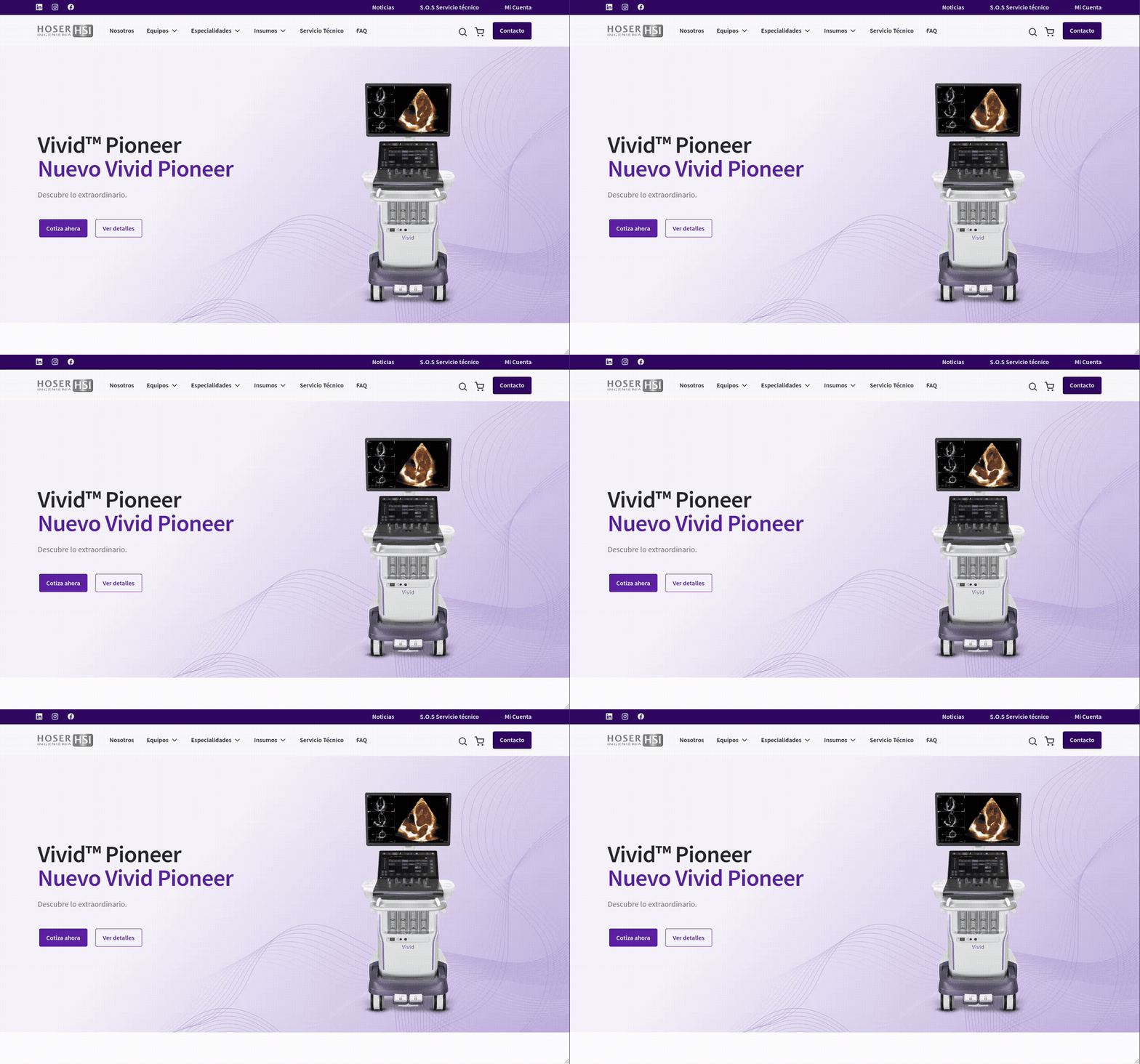
Rebuild the website from scratch with a modern stack: fast, secure, and built on technology that would not be obsolete in five years. Raise the investment in social media, not just posts and stories, but real content production. Reels. Interviews. Paid reach on Instagram and LinkedIn.
And something we had been building toward for a while: a proper audiovisual capability. We had started doing basic social media content work for smaller clients, but for this engagement we went further. We put together a team, invested in cameras and microphones, and started going in person to medical congresses and conferences to record stands, presentations, and interviews. We mixed and mastered the footage and published it across their social channels.
The client did not hesitate. The data had already made the case. This was not a sales conversation. It was a next-step conversation, and those are very different things.
What Phase 2 Produced
By the end of 2025, the results were clear. Search Console impressions and clicks had more than doubled. Inquiries were coming in from both the website and social media. Healthcare professionals were creating their own content and naming the company, engaging with the brand the way you only see when a presence feels genuinely alive.
Hoser was not just visible. It was part of the conversation in its industry.



None of that was accidental.
What This Story Is Actually About
Phase 2 was always the plan. I knew it in 2020, from that first call.
But you cannot walk into a client meeting and say "give me five years and I will transform your business." You earn that right by doing Phase 1 well, tracking everything honestly, and letting the results make the argument for you. The 2022 meeting worked because the data spoke before I did.
That is what web consulting is for. Not to show up with a proposal and a promise. To show up with a diagnosis, execute with patience, and build the kind of trust that makes the next phase possible.
Something else made this work that I have not mentioned yet. From day one, my point of contact has been the same manager. Five years, same person. Over time, that relationship became something closer to a partnership than a client engagement. He shares feedback from inside the company. I bring ideas from the outside. We have developed a habit of discussing new opportunities every time we talk, and his perspective has shaped our solutions in ways I could not have reached alone. The most accurate work we have ever delivered came from that back-and-forth. It was never just us executing a plan. It was a collaboration.
There are companies with great people and a real product that are exactly where they deserve to be in the digital world, because someone sat down with them, told them the truth, and had the patience to see it through. Hoser is one of them. There should be more.
That last part is not something you can manufacture. You can only earn it.